
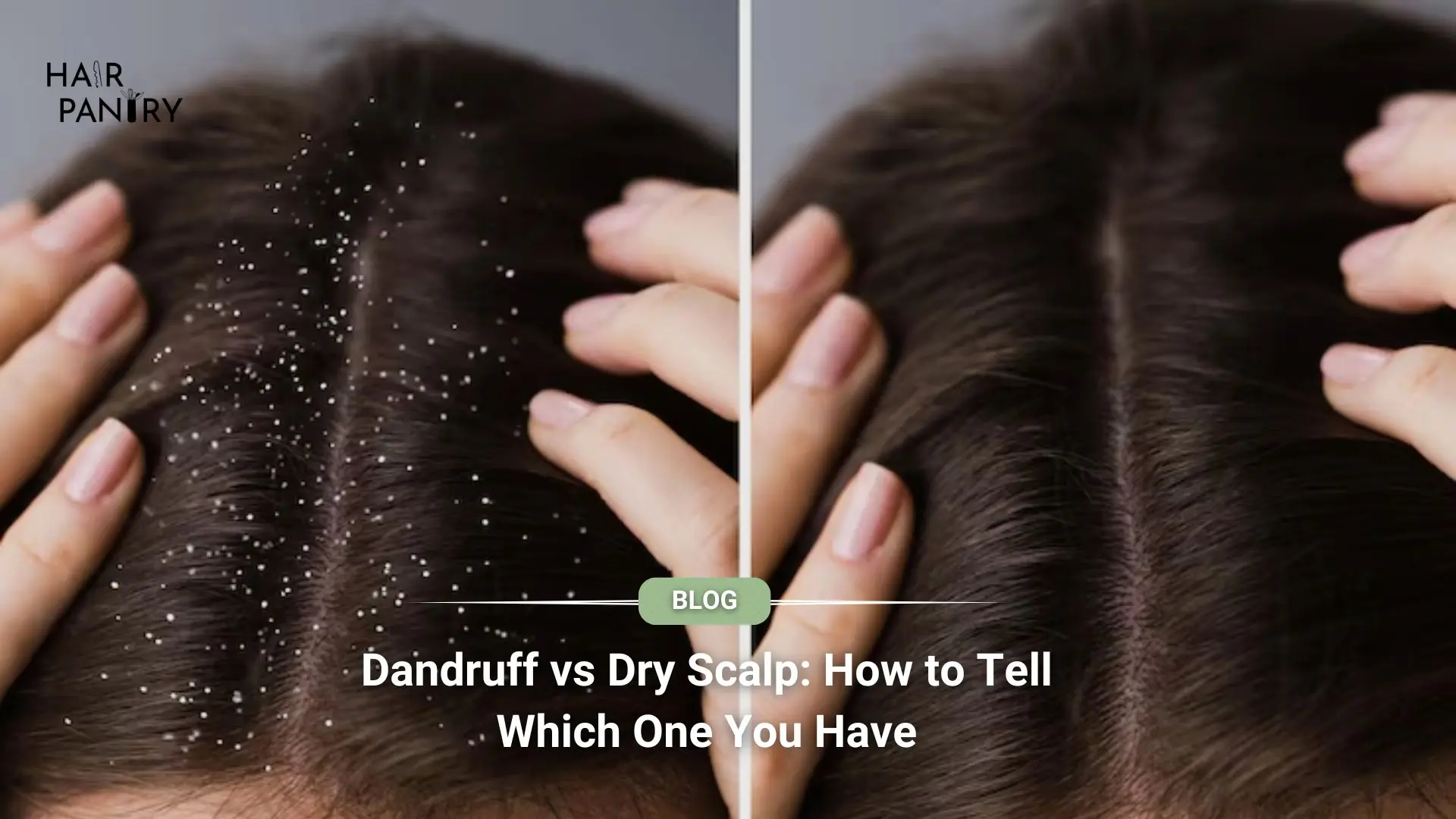
You shake your head and see white flakes on your shoulders. You scratch your scalp and it feels tight and uncomfortable. So you grab an anti-dandruff shampoo from the shelf, but a few weeks later, nothing has changed.
Sound familiar?
Here is the problem: most people treat dandruff when they actually have a dry scalp, or treat a dry scalp when they actually have dandruff. These two conditions look almost the same from the outside, but they have completely different causes. Using the wrong treatment will not just waste your time and money, it can actually make things worse.
In this guide, we will break down exactly how to tell the difference between dandruff and dry scalp, what causes each one, and, most importantly, what you should actually do about it.
Dandruff is not about “dirty hair” or poor hygiene. It is a scalp condition that happens when a naturally occurring yeast called Malassezia grows too much on your scalp. This yeast feeds on the natural oils your scalp produces. When it overgrows, it irritates the scalp and causes skin cells to shed much faster than normal, creating those visible, stubborn flakes.
Dandruff is also closely linked to a condition called seborrheic dermatitis, which is basically the medical name for persistent dandruff. It is very common, studies suggest that roughly 50% of adults worldwide deal with dandruff at some point in their life.
Key thing to remember: Dandruff is a fungal and oil-related problem. It has nothing to do with dryness.
A dry scalp is exactly what it sounds like, your scalp is not getting enough moisture. The skin becomes dry, flaky, and irritated. It works the same way as dry skin on your face, hands, or elbows.
Dry scalp is often triggered by external factors like weather, harsh shampoos, overwashing, or even not drinking enough water. In Pakistan especially, the extreme dry heat in summer and cold, dry winters can both strip the scalp of its natural moisture.
Key thing to remember: Dry scalp is a moisture and hydration problem. It is not caused by fungus or excess oil.
This is the fastest and most reliable way to figure out which one you have. Yes, really just look at the flakes.
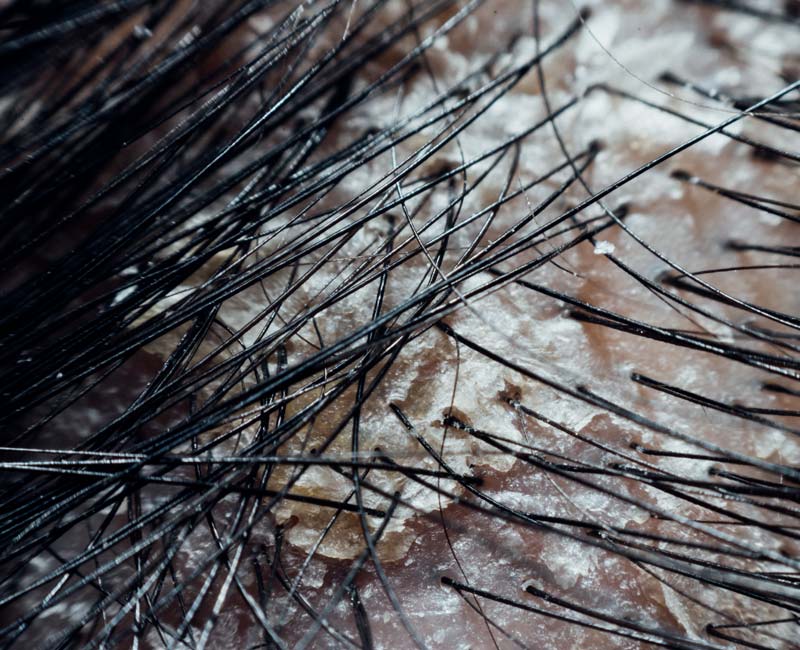
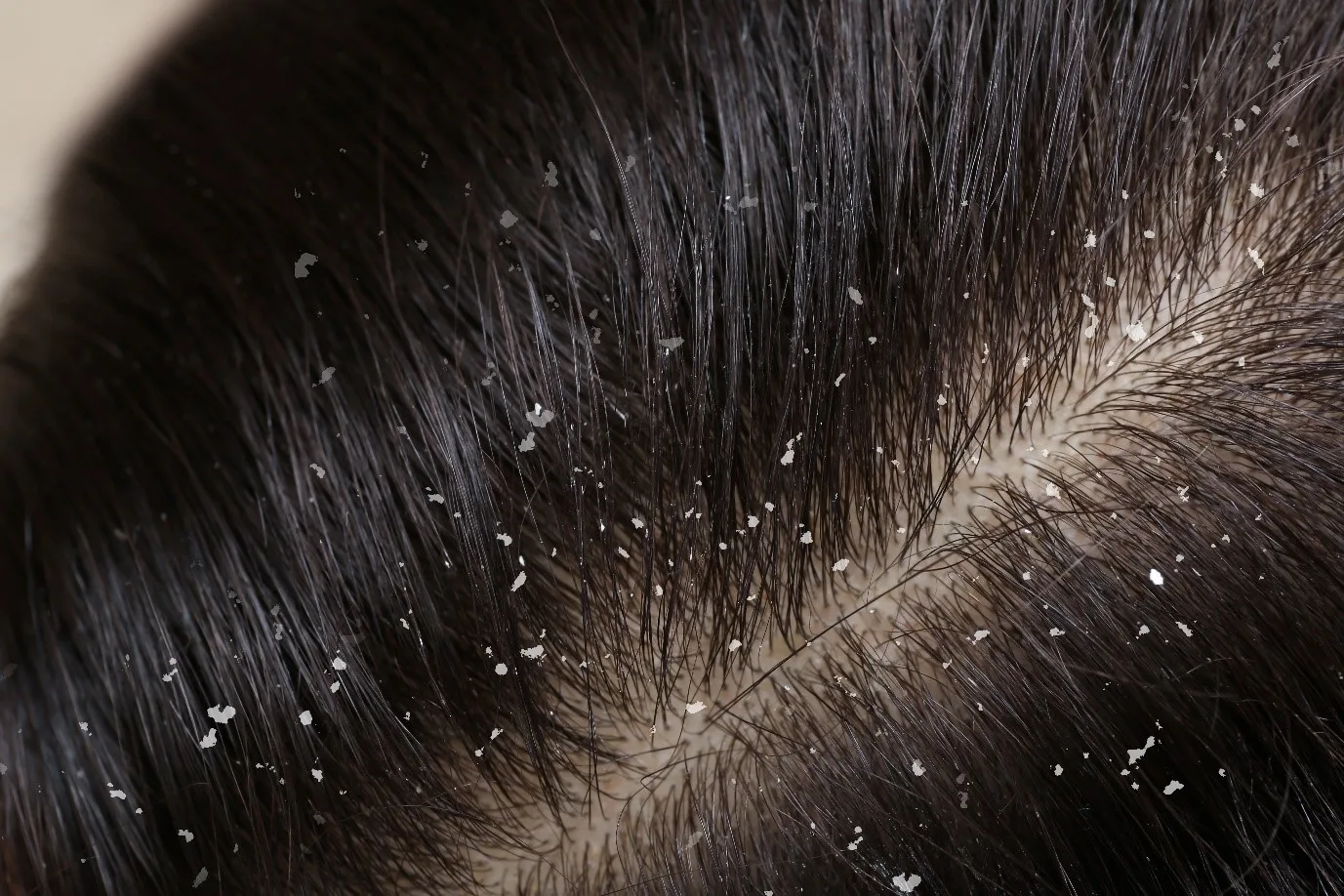
If the flakes are large, yellowish or off-white, and slightly greasy or sticky → that is dandruff. Dandruff flakes tend to clump together. They stick to your hair strands and do not fall off easily. If you run your fingers through your hair, you might feel oily residue on them.
If the flakes are small, pure white, and dry or powdery → that is a dry scalp. Dry scalp flakes are light. They fall off easily and you will notice them on your clothes and shoulders more quickly. They look almost like fine dust.
Think of it this way: dandruff flakes are oily and heavy, dry scalp flakes are light and airy. That one difference tells you a lot.
| Dandruff | Dry Scalp | |
| Flake size | Large, sometimes clumped | Small and fine |
| Flake texture | Oily, greasy, or waxy | Dry, light, powdery |
| Flake color | Yellow-white or off-white | Bright white |
| How scalp feels | Oily, sometimes greasy | Tight, dry, uncomfortable |
| Itching level | Often severe and persistent | Usually mild |
| Scalp appearance | May look red or inflamed | May look dull and dry |
| Hair feel | Hair looks greasy at roots | Hair may feel dry and brittle |
| Dry skin elsewhere? | Usually no | Often yes (face, elbows, etc.) |
| Root cause | Yeast overgrowth + excess oil | Lack of moisture |
| What makes it worse | Oily products, skipping washes | Hot water, harsh shampoos, cold weather |
Beyond the flakes, pay attention to how your entire scalp feels.
With dandruff, the scalp often feels itchy in a deep, persistent way. You might notice redness or mild inflammation. Sometimes it is concentrated around the hairline, behind the ears, or on the crown of the head — areas where oil production is highest. The itching tends to keep coming back, even after you wash your hair.
With a dry scalp, the itching is usually less intense. What stands out more is a tight, uncomfortable feeling — like your scalp is being pulled or stretched. You might also notice the skin on your face is dry, or your lips crack easily, or your elbows feel rough. If dryness is a pattern across your body, your scalp problem is likely dry scalp rather than dandruff.
Several things can trigger or worsen dandruff:
In Pakistan’s humid summers, sweat and heat increase scalp oil production, which is why dandruff tends to flare up more during the hotter months.
If you are still not sure, try this:
If your scalp looks or feels oily, and you see larger yellowish flakes — you likely have dandruff.
If your scalp feels tight and dry, and the flakes are small and white — you likely have dry scalp.
You can also do a “paper towel test”: press a plain tissue or paper against your scalp for a few seconds. If it picks up oily residue, dandruff is the more likely culprit. If the tissue comes away clean and dry, it points toward dry scalp.
Treating dandruff means targeting the root cause, the yeast overgrowth and oil buildup. Here is what actually works:
Use a targeted anti-dandruff shampoo. Look for shampoos that contain ingredients like:
The key is not just using these ingredients, but using them consistently over several weeks.
Manage scalp oil. A scalp elixir applied before shampooing can help break down oil buildup, remove dirt from follicles, and calm inflammation before you even wash. This “pre-shampoo” step is something a lot of people skip, but it makes a real difference for persistent dandruff.
For people dealing with stubborn dandruff in Pakistan, the No Flakes Given bundle by The Hair Pantry is worth looking at. It pairs the Reclaim Dandruff Elixir — which contains Tea Tree, Jojoba, Lavender, and Lemongrass — with the Clear Shampoo, which is formulated with Piroctone Olamine (1%) and Salicylic Acid (2%). The elixir is massaged in before washing to loosen buildup and calm the scalp, and the shampoo then cleanses and targets the yeast directly. Using both together as a routine — rather than just reaching for any random shampoo — gives the scalp a more complete treatment.
Wash regularly. For dandruff, skipping washes makes things worse. Washing 3–4 times a week helps prevent oil and dead skin from building up.
Avoid heavy, oily hair products. Thick oils and pomades applied directly to the scalp can feed the yeast and worsen dandruff. If you use hair oils, apply them to the lengths and ends only — not the scalp.
Treating dry scalp is about putting moisture back in and stopping what is taking it away.
Switch to a gentle, moisturizing shampoo. Look for sulfate-free shampoos with hydrating ingredients like Aloe Vera, glycerin, or natural oils. Avoid anything labeled “deep cleansing” or “oil control” — these will only dry out your scalp further.
If you have been using strong, stripping shampoos for a while, the Bond Repair Shampoo can be a good transitional option. It is designed for dry and damaged hair, and its gentler cleansing formula will not strip the scalp the way harsher shampoos do.
Stop washing with hot water. Use lukewarm — not hot — water. This is one of the most effective changes you can make for dry scalp, and it costs nothing.
Hydrate from the inside. Drink more water. It sounds simple, but it genuinely helps. Scalp dryness is often a visible sign of body-wide dehydration.
Use a nourishing scalp oil sparingly. Unlike with dandruff (where you want to avoid oils on the scalp), a dry scalp can benefit from light, nourishing oils. Jojoba oil in particular mimics the scalp’s own sebum and absorbs well without clogging pores.
Reduce wash frequency. If you are washing every day, try going to every other day. Let your scalp’s natural oils restore themselves.
Yes, and this is more common than people think. Some people have an oily scalp with dandruff AND dry, brittle hair lengths. This can confuse people because they try to moisturize the lengths while also treating the scalp, and it feels like a contradiction.
There is also a condition called scalp psoriasis which can look like severe dandruff but is actually an autoimmune skin condition. If your “dandruff” is thick, silvery, and appears in patches, or if it is accompanied by itching that is so intense it disrupts your sleep, please see a dermatologist. Over-the-counter products will not properly treat psoriasis.
Most cases of dandruff and dry scalp respond well to the right home care. But you should see a dermatologist if:
A dermatologist can do a proper scalp examination and, if needed, prescribe a stronger medicated treatment.
The flakes look similar, but dandruff and dry scalp are completely different problems that need completely different solutions. Using the wrong treatment is one of the most common reasons people struggle with scalp issues for months — or even years — without seeing improvement.
Take a few minutes to really observe your scalp: look at the flakes, feel the texture, and notice your overall hair condition. Once you identify the real cause, the path to a healthier scalp becomes much clearer.
If you are dealing with dandruff, explore The Hair Pantry’s dandruff range — products specifically formulated to tackle the root cause, not just mask the symptoms.
If your scalp leans dry and damaged, the Dry Damaged Hair range has options built around restoring moisture and strengthening the scalp’s natural barrier.
Your scalp deserves the right treatment — not just any treatment.

Dr. Amman Amjad is a certified dermatologist and aesthetic physician with over 5 years of experience. She specializes in laser treatments, threads, and PRP therapy. Based in Lahore, Pakistan, Dr. Amman offers advanced care for hair loss, damaged hair, dandruff, and other skin and scalp conditions. With certifications from the USA (AACME) and the UK (CPD), she implements the latest techniques and knowledge in aesthetic medicine.